
Cabinetry That Fits What the Home Already Is
Traditional cabinets in Dallas for established homes where raised-panel construction and period-appropriate finishes need to align with existing architecture
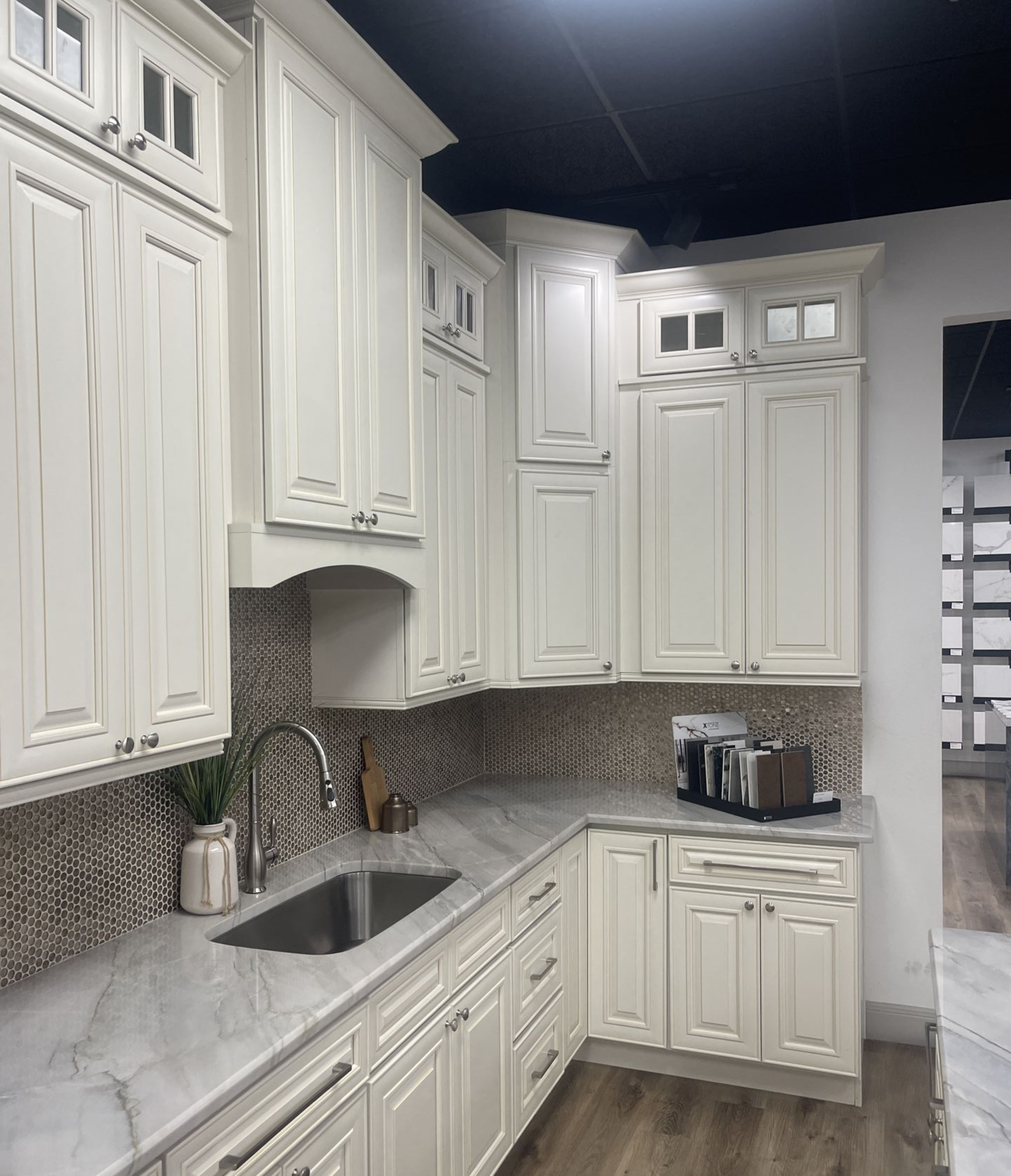
In neighborhoods like Midlothian and along the Highway 820 corridor through Fort Worth, residential construction from the 1970s through the mid-1990s produced homes with formal dining rooms, defined kitchen footprints, and architectural detailing—crown molding, raised-panel interior doors, arched passageways—that a flat-panel or frameless cabinet replacement would visually contradict. Granite Store Direct installs traditional cabinetry for Dallas homeowners working in those homes, where the cabinet selection is not just a style preference but a decision about what the renovation will do to the character of the original construction. Solid wood raised-panel doors, furniture-style toe kicks, and traditional hardware proportions are the elements that read as intentional in those interiors rather than as an update that aged quickly.
The design consultation at Granite Store Direct pairs traditional cabinet styles with granite or marble countertop selections, which are the countertop materials that have historically been specified with this cabinet format and that share the same visual weight. That pairing is evaluated during the consultation using physical samples so that wood finish tone—whether stained, glazed, or painted—is confirmed against the stone's movement and background color before either material is ordered. Multi-decade cabinet installation experience shapes that evaluation: the consultation can advise on which traditional cabinet profiles suit the existing trim and millwork in the home rather than presenting styles in isolation.
Set up a design consultation to review traditional cabinet styles and countertop pairings suited to your home's existing architecture.
What Proper Traditional Cabinet Installation Requires
Traditional raised-panel cabinets introduce fitting conditions that flat-panel and frameless lines do not. Face frame members, applied moldings, and furniture-style base details all require scribing and fitting to walls and floors that have shifted over the decades in older DFW construction—a crown molding run that meets a ceiling which has settled unevenly, or a base cabinet run that needs a furniture foot detail to work around a floor that has dropped at one end, requires more fitting time than a standard installation and cannot be resolved by shimming alone. Granite Store Direct's in-house installation crew handles those conditions directly, applying the same precision standards used in stone fabrication to the fitting and scribing work that determines whether traditional cabinetry looks like it belongs in the house or looks like it was placed into it.
After the installation and countertop work are complete, the kitchen or bathroom will show door and drawer alignment consistent with the face frame reveal, crown molding that meets the ceiling plane without visible gaps, and a countertop edge profile—ogee, bevel, or bullnose are the profiles historically associated with traditional cabinetry—that reinforces the period-appropriate character of the selection rather than contradicting it. Those are observable details that distinguish a traditional cabinet installation done with full attention to the home's existing conditions from one where style was selected without regard to what surrounds it.
Because Granite Store Direct handles plumbing, sheetrock, and structural adjustments alongside cabinet installation, a traditional kitchen renovation that requires a layout change—moving a sink wall, opening up a peninsula, or adjusting a doorway opening—is managed as one coordinated project rather than a sequence of separately contracted trades. That coordination matters most in older homes where utility rough-in locations were set for a layout that the current renovation is departing from..
What Homeowners Ask Before Starting a Traditional Cabinet Project
The questions below address how traditional cabinet installation works and what conditions in older Dallas-area homes affect the scope and fitting process.
What construction details define a traditional raised-panel cabinet?
Traditional cabinets use a face frame—a solid wood border attached to the front of the box—combined with raised-panel doors where the center panel is shaped to project above the surrounding rail and stile profile; that combination of face frame and raised panel is what creates the shadow lines and visual depth that distinguish traditional cabinetry from flat-panel or Shaker styles.
How does the age of a home's trim and millwork affect traditional cabinet selection?
Homes in Midlothian, Mansfield, and Fort Worth built before the mid-1990s often feature crown molding profiles, door casings, and baseboard heights that were standard in that era; selecting a cabinet door profile and stile width that matches the visual weight of those existing trim elements is the step that makes the renovation feel integrated rather than replaced.
Why does countertop edge profile selection matter more with traditional cabinets than with modern styles?
Traditional raised-panel door profiles carry visual weight through their depth and shadow lines; a countertop with a flat or minimalist edge profile creates a visual mismatch that draws attention to the contrast—ogee, dupont, or bevel edges share the same depth logic as raised-panel door construction and maintain the period-appropriate character of the selection.
What fitting steps are specific to traditional cabinet installation in older homes?
Scribing the base cabinet toe kick to an uneven floor, fitting the face frame filler panels to walls that are out of plumb, and mitering crown molding returns at interior corners where walls have moved since original construction are the three fitting operations that take significantly more time in homes built before 1995 than in newer construction with flatter, more consistent surfaces.
How is the traditional cabinet installation sequence coordinated with countertop work?
Base cabinets are leveled and set first, face frames are confirmed plumb and aligned across the run, and upper cabinets are installed and adjusted before any countertop measurement is taken—field measurement of the installed cabinet positions is the step that ensures the countertop is fabricated to actual conditions rather than design dimensions, which is particularly important in older kitchens where wall angles may not be square.
Granite Store Direct also installs traditional cabinets in Mansfield, Keller, Flower Mound, Carrollton, Plano, Allen, and Fort Worth. Call Granite Store Direct at (817) 371-2316 to arrange a consultation covering traditional cabinet style selection, countertop pairing, and the full installation scope for your home.