
Stonework That Anchors a Room's Design
Fireplace installation in Dallas for living spaces that need a defined, finished focal point
Granite Store Direct handles indoor fireplace installation in Dallas with a specialty in granite surrounds and custom stone finishes that give a room a deliberate, finished quality. Homeowners who are either adding a fireplace surround for the first time or replacing a dated builder-grade finish often find that the stone selection and fit quality define whether the final result looks intentional or incidental. Each project begins with an on-site measurement review, because granite's rigidity means cuts made even a few millimeters off-center will telegraph as visible gaps once the surround is set against the wall and hearth.
The installation process involves templating the existing or framed opening, selecting slab material from available granite stock, cutting to specification, and fitting the surround in sections that account for the fireplace's dimensional tolerances. Many Dallas homes built during the 1980s and 1990s feature standard builder fireplaces with prefabricated metal boxes and simple drywall returns—these openings translate directly into granite surround projects without structural modification, which keeps the scope contained and predictable. Granite's density also means that once the material is set and the joints are finished, the surround does not shift, warp, or absorb moisture from the firebox opening over time.
Arrange an on-site visit to review your existing fireplace opening and explore granite finish options suited to your space.
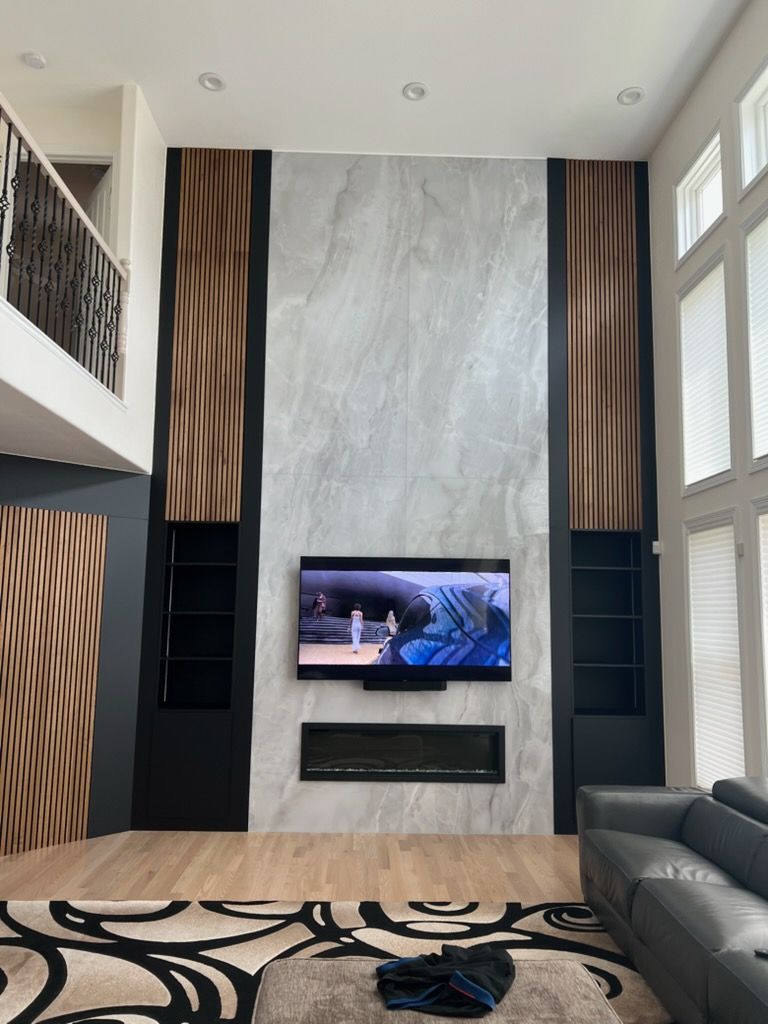
How Granite Performs as a Fireplace Surround Material
Granite holds up around fireplace openings because the material is igneous—formed under intense heat—which means it responds to radiant heat from a firebox without the surface stress that affects softer stones or synthetic materials. During installation, each panel section is dry-fit before adhesive is applied, and any inconsistency in the wall return or hearth base is shimmed and corrected before the stone is committed to position. This sequencing matters because granite cannot be planed or trimmed after it is set the way wood trim can be adjusted.
Once the surround is complete, the change in the room is structural in appearance rather than decorative—granite's natural veining and surface depth give the fireplace wall a dimension that painted drywall or tile cannot replicate. Granite Store Direct works through slab options with clients before any cutting begins, matching the stone's color range and pattern movement to the room's flooring, wall color, and furniture scale. Finish options—polished, honed, or leathered—affect both the visual weight of the surround and how fingerprints and surface contact read on the stone day to day.
Updates to existing fireplaces follow a similar process to new installations: the old surround material is removed, the substrate is evaluated for level and condition, and new granite panels are templated and set to current measurements. Homeowners choosing to update rather than rebuild benefit from the fact that granite surrounds can be replaced independently of the firebox unit itself, which limits the scope of the project to the visible stone faces and hearth extension rather than the mechanical components of the fireplace.
What Property Owners Ask About the Work
The questions below address how granite fireplace installation is actually performed and what to expect from the material once it is in place.
What granite finish works best for a fireplace surround?
Honed and leathered finishes are common choices for fireplace applications because they reduce glare from ambient light and show less surface marking near high-traffic seating areas; polished finishes work well when the room has lower direct light and the goal is to maximize the stone's color depth and pattern contrast.
How is the granite surround measured and cut before installation?
A physical template is produced from the actual fireplace opening dimensions, and granite panels are cut from slab material to match those exact measurements before the installation appointment; this approach eliminates on-site cutting, which would produce dust and risk micro-fractures in the finished edges.
What happens to the wall surface behind an existing surround when it is removed?
The substrate is inspected for levelness and any damage from the previous installation before new stone is set; in Dallas-area homes where drywall or mortar board was used as the backing material, minor patching or leveling compound may be applied to create a consistent plane before the granite panels are adhered and grouted.
Why does the hearth extension require separate templating from the vertical surround panels?
The hearth sits on a horizontal plane and bears direct foot traffic and object weight, so its thickness, edge profile, and overhang dimensions are calculated independently to meet both the aesthetic proportions of the surround and the structural requirements of the floor transition beneath it.
What maintenance does a granite fireplace surround require after installation?
Granite used around fireplaces benefits from periodic sealing—typically once every one to two years depending on the finish type—to prevent ash residue and cleaning products from penetrating the surface; honed and leathered finishes are more porous than polished surfaces and may require sealing on the shorter end of that interval.
Granite Store Direct works with homeowners throughout the selection and installation process, from slab review to final fit and finish. To begin planning your fireplace surround, request a consultation to discuss your opening dimensions, room layout, and the granite options currently available.