
Scratch-Resistant Surfaces Built for Heavy Kitchen Use
Porcelain countertops in DFW for kitchen and bathroom remodels where scratch resistance, stain performance, and heat tolerance are primary requirements
After porcelain countertop installation is complete, the surface you're working with requires no sealing schedule, sheds staining agents without penetration, and holds up against scratch contact in ways that quartz and most engineered surfaces do not. Granite Store Direct produces that result through precise slab selection, substrate preparation, and precision installation for kitchens and bathrooms across Dallas-Fort Worth. Homeowners in high-investment corridors like Plano, Allen, and Carrollton are specifying porcelain specifically because it handles Texas heat and daily prep-surface demands without the ongoing maintenance that natural stone requires.
Porcelain is a fired ceramic material with hardness ratings that exceed most natural granites—scratch resistance comes from the full-body composition of the slab, not from a surface coating that degrades over time. That distinction matters when evaluating longevity: a porcelain countertop's scratch and stain resistance characteristics at year ten are the same as at installation, because there is no sealant layer to wear away. The material is also UV-stable, which affects color retention near windows and skylights in ways that some engineered quartz products are not.
Arrange a design consultation to review slab options and begin the 3D visualization process for your kitchen or bathroom layout.
The Difference Between Porcelain and Surface-Coated Alternatives
Granite Store Direct's porcelain countertop process includes material sourcing, slab selection with design consultation, and precision installation with seam placement planned before fabrication begins. A 3D visualization step is included, which allows you to see how the selected slab's veining or pattern will read across your specific countertop layout before any cutting occurs—a meaningful quality control step when working with large-format slabs where pattern continuity matters.
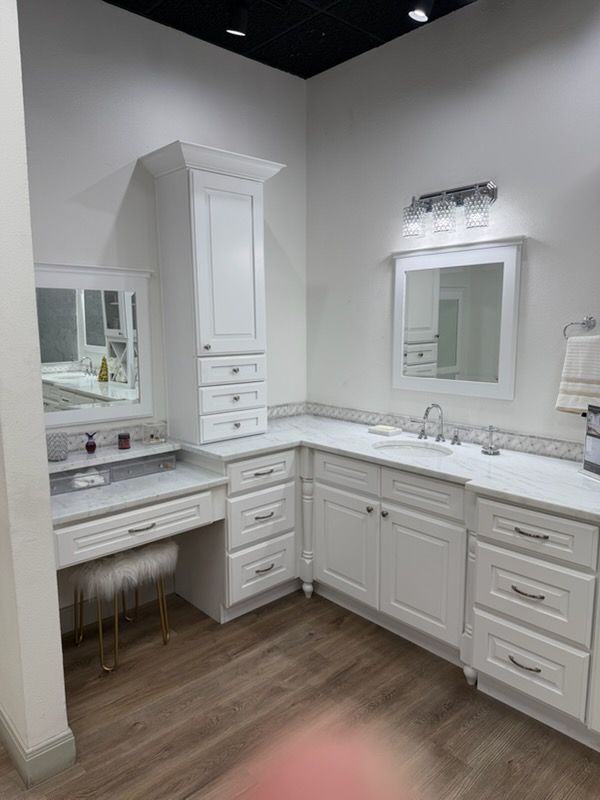
What changes visually after installation is immediate: the surface presents as continuous and consistent across the full countertop run, with edge profiles that integrate cleanly into the cabinet line. Because porcelain requires no sealing, there is also no post-installation sealer application period or cure time before the surface is in full use—the countertop is functional the day installation is complete.
Custom cabinet integration is part of the scope Granite Store Direct coordinates, which matters for projects where countertop overhang dimensions or edge profiles need to align with specific cabinet door configurations. Free estimates are provided before any material commitment, and design consultation is included with installation rather than billed as a separate engagement..
Questions Before Choosing Porcelain Countertops
Porcelain raises comparison questions against granite, quartz, and solid surface that affect material selection decisions. The following covers the questions that come up most consistently during DFW countertop consultations.
Why should I choose porcelain over granite for a Dallas kitchen?
Porcelain requires no sealing and has higher scratch resistance than most granite varieties, which reduces ongoing maintenance requirements in high-use kitchen environments where granite would need annual resealing.
How is the slab selected for a specific countertop layout?
Slab selection involves reviewing veining pattern and scale against your countertop dimensions, then using 3D visualization to confirm how the pattern distributes across the layout before fabrication is authorized.
What does porcelain countertop installation cost in DFW?
Pricing varies based on slab grade, edge profile complexity, cutout count, and installation scope—a free on-site estimate is the accurate way to establish project cost rather than per-square-foot averages, which exclude fabrication variables.
How does porcelain hold up in Texas heat compared to other surfaces?
Porcelain is fired at temperatures exceeding typical kitchen conditions, making it thermally stable under normal use; it handles direct sunlight exposure in south-facing kitchens without the color shift risk that some quartz products carry.
What maintenance does porcelain require after installation?
Porcelain countertops are cleaned with standard household cleaners and require no sealing, polishing products, or periodic professional maintenance—surface care is limited to routine cleaning only.
Granite Store Direct manages the full porcelain countertop scope from slab sourcing through final installation, with free estimates and design consultation included. Submit your project details to begin the material selection and visualization process for your DFW kitchen or bathroom.