
Natural Stone Selected for Premium Kitchen Projects
Marble and quartzite countertop sales in Dallas for luxury kitchen and bath renovations requiring natural stone aesthetics and surface durability
Selecting marble or quartzite begins with understanding that these two materials behave differently under identical conditions, and treating them as interchangeable at the point of sale leads to finishes that fail expectations within a year. Granite Store Direct sources exotic marble and quartzite slabs for homeowners in Dallas undertaking premium kitchen and bath renovations, with a consultation process built around hardness, porosity, and finish suitability for each installation context. The distinction matters most in kitchens, where a polished marble—calcite-based and reactive to acids—develops etch marks from lemon juice and vinegar, while a quartzite of similar visual character resists that reaction entirely because its mineral composition is silica-based rather than carbonate.
The sales process at Granite Store Direct covers slab selection at full size, hardness and porosity consultation to match the stone to its intended use, and finish options including polished, honed, and leathered surfaces—each of which changes how the stone reads visually and how it responds to daily contact. Sealing education is part of the consultation rather than an afterthought, because penetrating sealer requirements vary by stone porosity, and a client who does not understand the maintenance commitment for a particular marble before purchase is likely to be dissatisfied regardless of how well the installation is executed.
Request a free estimate and full slab review to evaluate how specific marble or quartzite options will read in your kitchen or bath space.
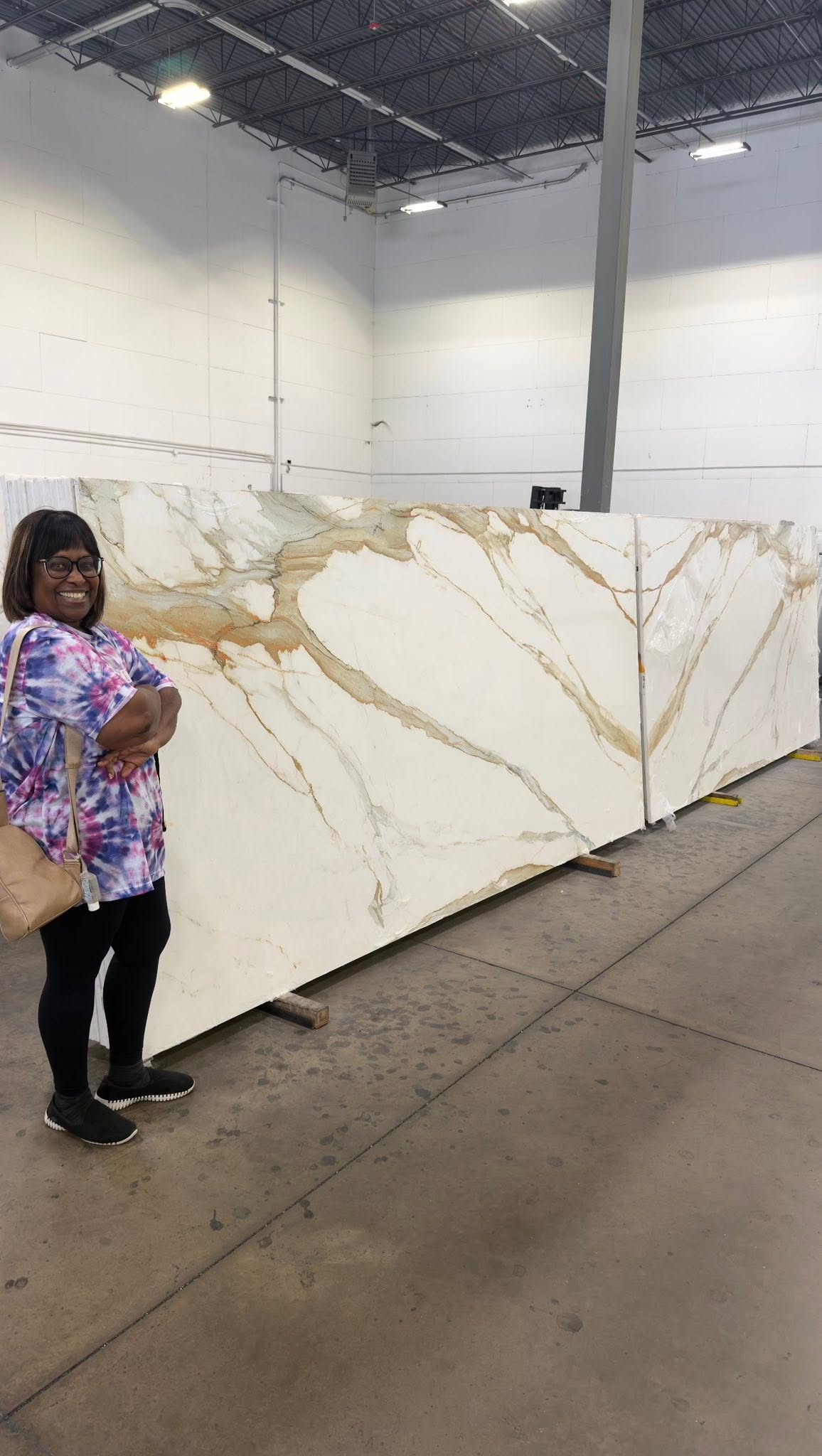
The Difference Between Marble and Quartzite in Practice
Quartzite forms when sandstone is subjected to intense heat and pressure, which recrystallizes the silica particles into an interlocked structure that is harder than granite and significantly harder than marble. That hardness means quartzite can take a polished finish that holds its sheen under kitchen use without developing the surface etching that affects marble when it contacts acidic foods or cleaning products. Marble, by contrast, develops a natural patina over time as the calcite surface reacts to its environment—a characteristic that some clients want deliberately and others find unacceptable, and clarifying that distinction before purchase is a core part of what Granite Store Direct addresses during the selection consultation.
After selecting and installing natural stone, clients will notice that a leathered quartzite finish—produced by running diamond-tipped brushes across the surface after honing—reads with texture and depth that a polished slab does not have, and also hides fingerprints and minor surface contact in ways that matter in high-use kitchen environments. A honed marble, conversely, shows contact marks more readily than a polished surface but etches less visibly because the surface is already matte. Finish selection is a practical decision, not just an aesthetic one, and the difference is apparent from the first week of use.
Affluent neighborhoods in Flower Mound and Allen have sustained demand for exotic stone with strong veining character and large slab formats—surfaces that read as a focal point in open-plan kitchens rather than background material. Edge profiling options including bevels, ogees, and mitered waterfall edges are available and are selected in relation to cabinet style and island scale. Free estimates cover material cost at the selected slab and finish, with edge profile factored into the total before any commitment is made..
Answers About How Marble and Quartzite Selection Works
These questions address the practical differences between marble and quartzite, how finish and porosity decisions are made, and what clients should know before selecting a natural stone slab in Dallas.
How do you determine whether marble or quartzite is the right choice for a kitchen countertop?
The primary factor is how the surface will be used and what maintenance the client is willing to commit to. Quartzite resists acid etching and surface abrasion better than marble and generally requires less frequent sealing, making it a stronger candidate for primary cooking surfaces. Marble suits applications where patina development is acceptable or desirable, such as baking areas or bath vanities with lighter daily contact.
What does a leathered finish involve and how is it produced?
A leathered finish is created by running diamond-tipped brushes across a honed stone surface, which opens the texture slightly and creates a low-sheen, tactile surface. It reduces fingerprint visibility on darker stones and adds depth to veining, but it also increases porosity slightly compared to a polished finish, which affects sealing frequency for marble.
Why does sealing education matter at the point of sale rather than after installation?
A penetrating sealer applied to an unsealed marble slab requires the stone to be dry and clean before application, and the reapplication interval varies from six months to two years depending on stone porosity and use intensity. Understanding that commitment before purchase prevents situations where a client selects a highly porous marble for a kitchen and then finds the maintenance requirement inconsistent with how they actually use the space.
What does full slab viewing reveal about natural stone that a sample cannot?
Natural stone varies within a single slab—veining concentrates in some areas and thins in others, background color shifts across the width, and inclusions appear at specific points. A small sample shows the stone's character at one spot; a full slab shows the complete range of variation the fabricator will work with when planning the layout and seam placement.
How does edge profile selection interact with the thickness of a natural stone slab?
Thicker slabs—typically 3 cm—support more complex edge profiles like ogee or layered waterfall without requiring laminating, while thinner 2 cm stone requires a built-up edge to achieve similar visual weight at the counter face. The slab thickness in stock affects which profiles are available without additional fabrication cost, and that is confirmed during the selection consultation.
Granite Store Direct provides exotic stone sourcing and full slab selection for marble and quartzite projects in Dallas, with free estimates that cover material, finish, and edge profile before any fabrication commitment. Call (817) 371-2316 to arrange a slab review and consultation. Granite Store Direct also offers marble and quartzite countertop sales in Houston, San Antonio, and surrounding areas.