
Cabinets That Work Across Decades of Design
Shaker-style cabinet installation in Dallas for kitchens that need timeless structure without heavy ornamentation
The recessed-panel, simple-frame construction of Shaker cabinetry has remained the most installed cabinet style in the DFW market across multiple renovation cycles—not because it follows trends, but because it resolves a design problem that heavily ornamented and fully flat alternatives each create in different ways. Granite Store Direct installs Shaker-style cabinets for homeowners across Dallas who are updating kitchens that range from mid-century builds in older suburban cores to newer construction that arrived with builder-grade finishes ready to be replaced.
Shaker doors—defined by a flat center panel set inside a square-edge frame—work because the frame gives the eye a reference line without projecting outward the way a raised-panel profile does, and without the starkness that a fully flat slab door creates in kitchens with traditional proportions. The selection process at Granite Store Direct treats cabinet finish and countertop material as interdependent: a painted Shaker door in an off-white or soft gray pairs differently with a busy granite slab than it does with a veined quartz, and resolving that relationship before fabrication prevents a mismatch that no amount of hardware adjustment fixes afterward.
Set up a design review with Granite Store Direct to compare Shaker finish options alongside countertop slabs in person before any material is committed.
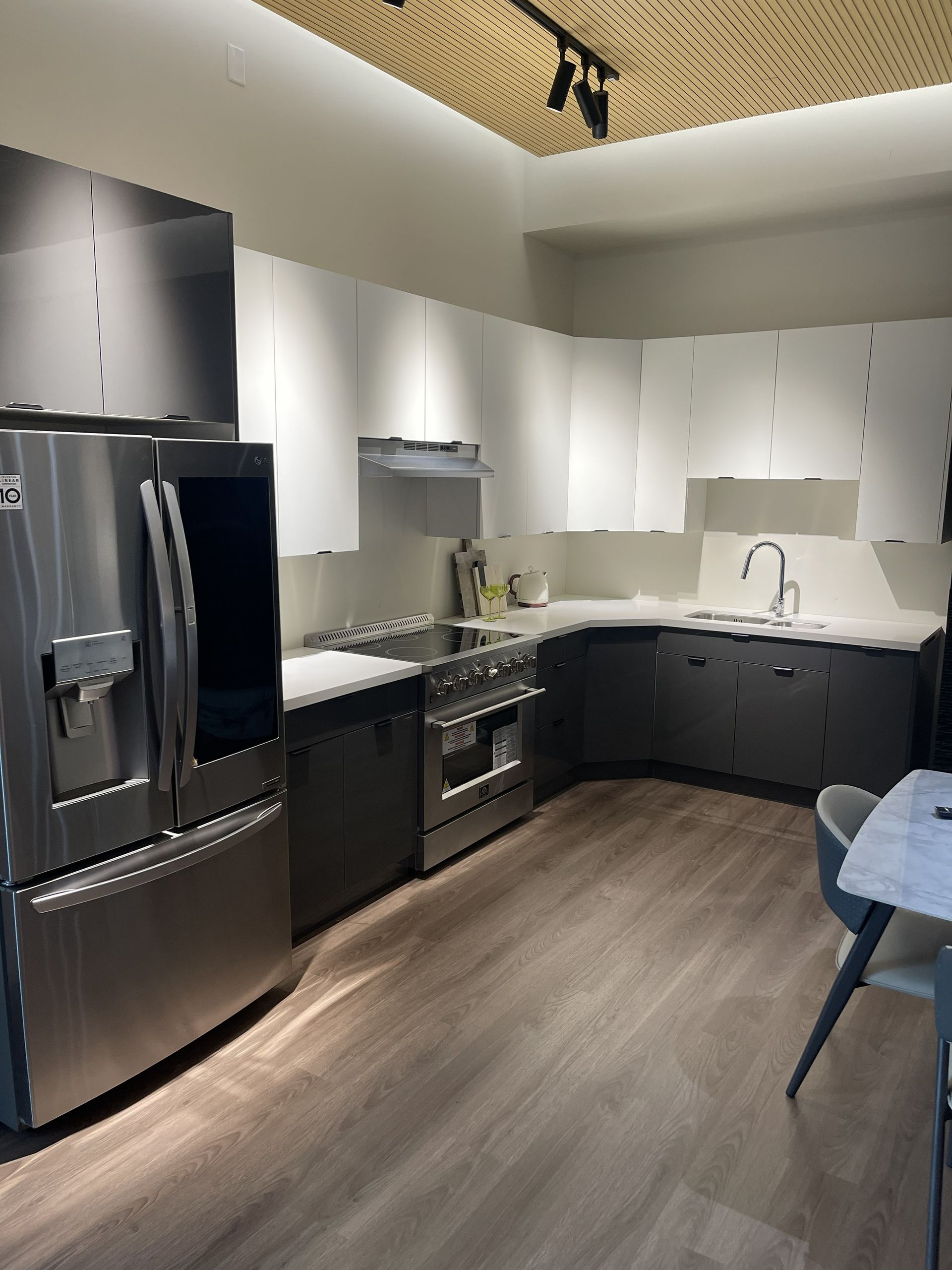
Why Shaker Cabinetry Pairs So Consistently With Countertop Upgrades
The structural logic of a Shaker door—recessed center, square perimeter frame—gives it what designers call visual neutrality: it registers as cabinet without demanding attention, which allows a granite island or a quartz run to function as the primary surface in the room. Granite Store Direct coordinates Shaker cabinet installation alongside countertop fabrication, which means edge profile decisions—bullnose, bevel, ogee—are made with the cabinet door style already confirmed rather than adjusted after the fact. That sequencing prevents the common outcome where a decorative ogee edge conflicts with a cabinet door profile chosen independently weeks earlier.
After installation, clients consistently notice that the kitchen reads as a more unified space than it did with the previous cabinets, even when the countertop is unchanged. The Shaker frame structure provides enough visual definition that upper and lower cabinet runs read as intentional rather than builder-default, without requiring crown molding or decorative glass inserts to carry the design. Paint-finished Shaker doors also respond well to touch-up work over time, which is a practical consideration in kitchens that see consistent daily use.
Shaker cabinets are available in both prefabricated and custom configurations. Prefab options cover standard opening dimensions and complete most projects faster; custom sizing addresses the non-standard cabinet runs that appear in Flower Mound and Keller homes where previous renovations introduced irregular bay widths. Hardware selection—knobs, bar pulls, or no hardware at all—is finalized after cabinet finish is confirmed, because the hardware tone affects how the countertop surface reads from across the room..
Answers About How the Work Is Done
The following questions address the practical details of Shaker cabinet selection and installation, including what affects scope, sequencing, and finished results in Dallas-area kitchens.
What makes Shaker-style doors different from other recessed-panel cabinet options?
Shaker doors use a square-edge frame without decorative profiling or applied molding at the panel intersection. That specific construction is what separates them from traditional raised-panel doors and from cathedral-arch styles, and it's what allows them to work with both contemporary countertop materials and more traditional stone selections.
How is the installation sequence managed when both cabinets and countertops are being replaced?
Cabinets are installed and leveled first, because countertop templating requires confirmed cabinet dimensions and heights. Attempting to template before cabinet installation is complete introduces measurement error that affects slab fit at the wall and at the sink opening.
What finish options hold up best in high-use Dallas kitchens?
Painted MDF Shaker doors in factory-applied finishes perform more consistently than site-painted wood in high-humidity cooking environments because the finish is cured under controlled conditions. Wood-veneer Shaker doors are appropriate where natural grain is part of the design intent, but they require more careful sealing near sink areas.
When should custom sizing be chosen over prefabricated Shaker cabinets?
Custom sizing is appropriate when existing cabinet openings do not match standard module widths—typically 9, 12, 15, 18, 21, 24, or 36 inches—or when a specific run requires filler panels wider than what standard prefab configurations allow without visible gaps.
What should you check once Shaker cabinet installation is complete?
Door alignment and gap consistency between adjacent doors are the two primary indicators of quality installation. Doors should hang with even reveals on all four sides, and the gap between neighboring doors should be consistent along the full run—irregular gaps indicate shimming issues at the box level that need correction before countertop work begins.
Granite Store Direct manages cabinet and countertop installation as a coordinated project rather than two separate contracts, which keeps the sequence and the visual result under one point of accountability. Granite Store Direct also installs Shaker-style cabinets in Houston and San Antonio. To discuss your kitchen's current layout and which Shaker configurations fit it, call (817) 371-2316 for a free estimate.